
Chapter XVI · 16 of 22 · Part III — Society & Structure
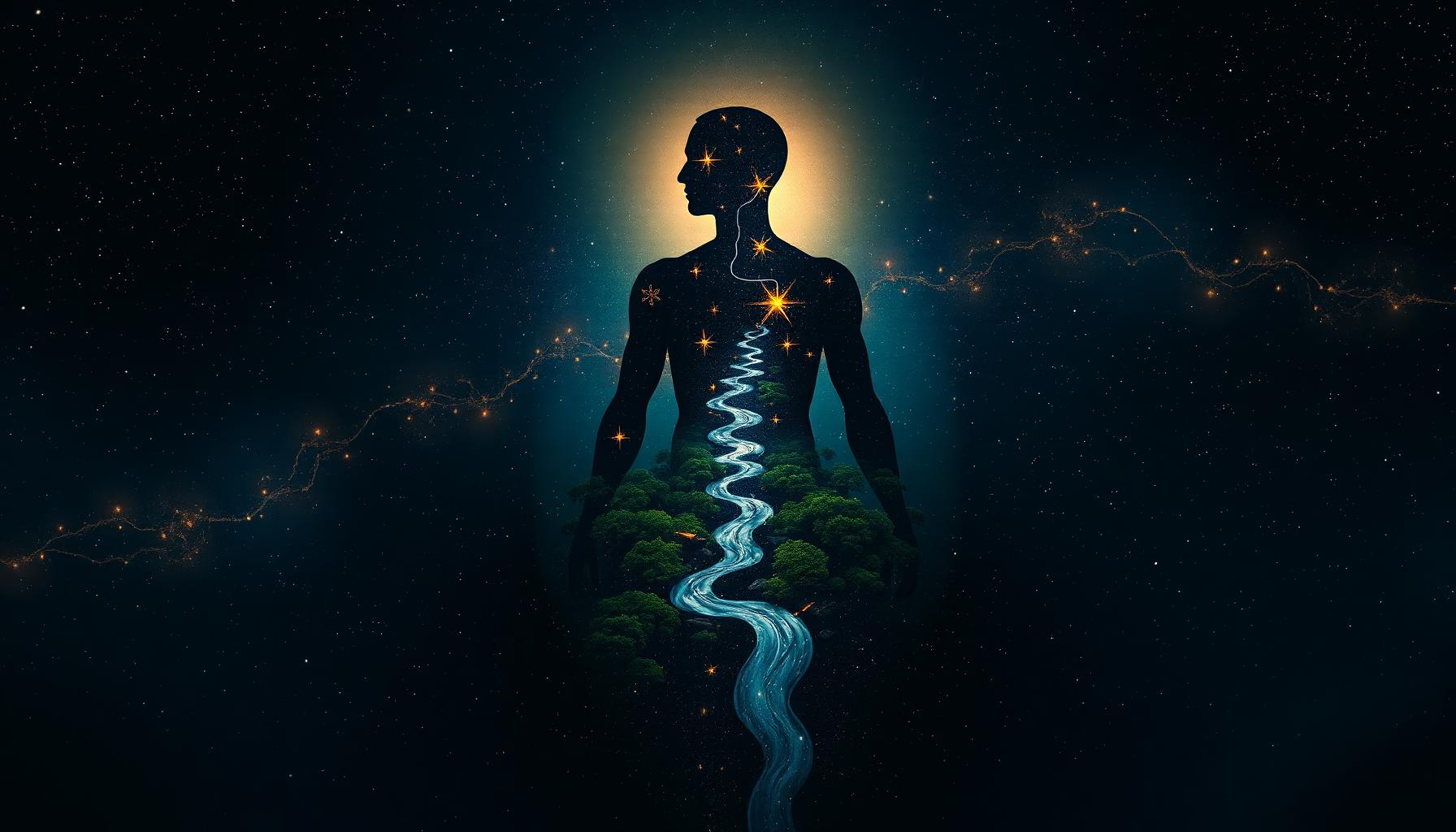
Health, Well-Being, and the Human Body as an Ecosystem
How do I tend the small wilderness that is my body?
You are not the owner of your body. You are its longtime collaborator. Inside you is a more complex ecology than any rainforest. Health begins with treating it that way.
Section II
Why This Matters
We were taught a mechanical view of the body — parts, malfunctions, repairs. The science of the last twenty years tells a different story: the body is an ecosystem, the gut a brain, inflammation a language, sleep a deep architecture.
Chronic disease now drives most of human suffering in wealthy countries. Almost all of it traces back to the same conditions: poor food, fragmented sleep, sedentary days, lonely lives, chronic stress. None of these are individual moral failures. All of them are cultural and personal at once.
Health is not the absence of disease. It is the slow practice of giving the body what it has needed for millions of years: real food, deep rest, sunlight, movement, belonging, and meaning.
When you take care of your body, you are taking care of the only instrument through which everything else in your life is possible.
Section III
Five Reflection Questions
Carry these questions like lanterns. Let them illuminate, not interrogate.
Question 01
“How does my body feel when no one is asking it to perform?”
Question 02
“What is one thing it has been quietly telling me?”
Question 03
“Where am I treating it as a machine rather than a garden?”
Question 04
“Whose example of aging do I want to inherit?”
Question 05
“What single act of care would my body thank me for this week?”
Section IV
Living Example
Islands of long life
When researcher Dan Buettner mapped the world for the highest concentrations of centenarians, he expected to find a diet. He found, instead, a way of life.
From Sardinia to Okinawa to Loma Linda, the Blue Zones shared common threads: daily movement built into life, deep social belonging, a sense of purpose, modest plant-rich meals, and time for stillness.
None of them had a longevity industry. They had longevity itself, because they had not lost the conditions inside which a body wants to keep going.
Section V
Living Solutions
Five practices you can begin today — small enough to keep, large enough to change you.
01
Protect Your Sleep
Treat sleep as the foundation of every other health choice. Most things improve when you sleep enough.
02
Move in Small Ways All Day
Steady, gentle motion outperforms occasional intensity. The body is meant to be in motion.
03
Eat What Your Grandmother Would Recognize
Whole, slow, mostly plants, mostly home-cooked. The data is unflashy and overwhelming.
04
Tend Your Nervous System
Daily quiet — breath, walk, prayer, meditation. Stress is the silent ingredient in nearly every chronic illness.
05
Keep Your People Close
Loneliness raises mortality more than smoking. Friendship is preventive medicine.
Section VI
Author Reflection
“Your body has been waiting, patiently, to be listened to. You do not need to overhaul a life. You need to start hearing it. Begin tonight with sleep, and tomorrow with a long, true breath.”
— Colleen Powers
Section VII
Community Inquiry
What question is alive in you today?