
Chapter XXI · 21 of 22 · Part V — Vision & Future
Humanity's Long Term Future
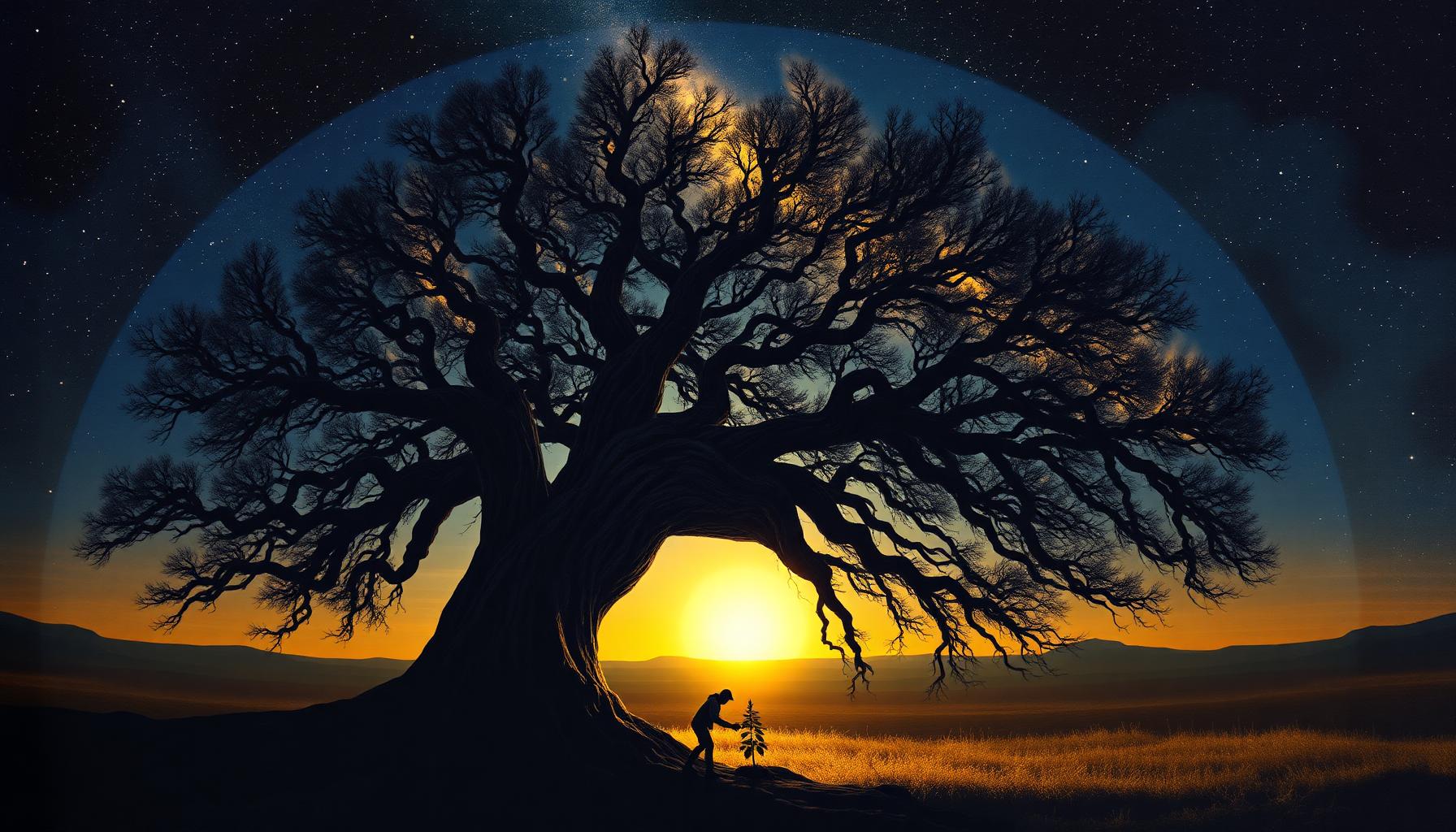
What am I planting that I will never sit beneath?
We are the first generation that could deliberately decide what kind of future humanity has — and one of the last that will get the chance to do so on easier terms. The long view is not optional. It is the ethical center of our time.
Section II
Why This Matters
Most of human history was lived within horizons of a single lifetime. We are now powerful enough to affect the next ten thousand years, and short-sighted enough to do it accidentally.
Long-term thinking does not mean ignoring the present. It means refusing to discount future generations as though they were a rounding error. Each of them will be as real to themselves as we are to ourselves.
The decisions of the next twenty to fifty years — about climate, AI, biology, governance, and inequality — will shape what is possible for the next thousand. There has never been a time when the leverage of a single generation was this large.
This is not a burden. It is an honor. Few generations have ever been asked to plant orchards on this scale.
Section III
Five Reflection Questions
Carry these questions like lanterns. Let them illuminate, not interrogate.
Question 01
“What would I do this decade if I took the year 2200 seriously?”
Question 02
“What am I building that could outlast me?”
Question 03
“Whose interests in the future am I in a position to defend?”
Question 04
“What habit of mine would I be ashamed of if great-grandchildren could see it?”
Question 05
“What gift would I most love to leave the species?”
Section IV
Living Example
Cathedrals and clocks
Inside a mountain in west Texas, a small team funded by the Long Now Foundation is building a clock designed to keep time for ten thousand years — a quiet monument to long thinking in a culture addicted to the quarterly report.
The clock will tick once a year. The cuckoo will come out once a millennium. Most of the people building it will never hear it ring.
It is, in the deepest sense, a cathedral — an act of devotion to the long human future, by people who have decided to live as though that future were real.
Section V
Living Solutions
Five practices you can begin today — small enough to keep, large enough to change you.
01
Choose One Long Investment
Plant a tree, fund a scholarship, start a savings line for a great-grandchild not yet born.
02
Decide Like an Ancestor
Before a major decision, ask: how will this look to someone seven generations from now?
03
Support Long-Horizon Institutions
Libraries, parks, universities, seed banks, archives. These outlive us by design.
04
Mentor for the Long Term
Pour into people whose impact you will not live to measure. That is the point.
05
Tell a Future Story
Speak, write, or share a vision of a flourishing year 2200. Future-making begins with future-imagining.
Section VI
Author Reflection
“We will not see most of what we plant. We will be remembered, if at all, by the shade we made possible. Live as if the year 2200 were watching. In some real sense, it is.”
— Colleen Powers
Section VII
Community Inquiry
What question is alive in you today?