
Pillar XI · 11 of 12
Community Care
No neighbor left to face crisis or quiet life alone.
Mission
To weave a fabric of care so dense that no neighbor falls through it — whether facing homelessness, aging, trauma, isolation, or disaster.
Vision
Every community provides a baseline of dignified care — for those without homes, for elders, for veterans, for the grieving, for the lonely — as an ordinary feature of belonging.
Why It Matters
The case for renewal
Markets cannot supply belonging; states cannot mandate it. Mutual care is the indispensable third — and the foundation on which all other pillars rest.
Loneliness, untreated trauma, and homelessness are not personal failures but symptoms of frayed community fabric. The cure is fabric, woven on purpose.
Disaster resilience is built in ordinary times by ordinary people who already know one another's names.
Current Challenges
What stands in the way
- 01Rising rates of homelessness amid record housing wealth.
- 02Elder isolation as families spread across continents.
- 03Veterans returning to communities they no longer recognize.
- 04Inadequate mental-health infrastructure.
- 05Disaster response built around outside agencies rather than neighbors.
Practical Solutions
What we are building
01
Housing-First & Wraparound Support
Provide stable housing as the foundation, then layer health, addiction, employment, and trauma support around it — the model with the strongest evidence.
02
Elder Cohousing & Care Networks
Co-housing communities, intergenerational programs, and visiting networks that keep elders connected and supported in place.
03
Veterans Programs
Peer support, meaningful work, land-based healing, and integration into the community fabric.
04
Mutual Aid Networks
Block-level networks for shared meals, childcare, eldercare, transportation, and disaster preparedness.
05
Community Kitchens & Pantries
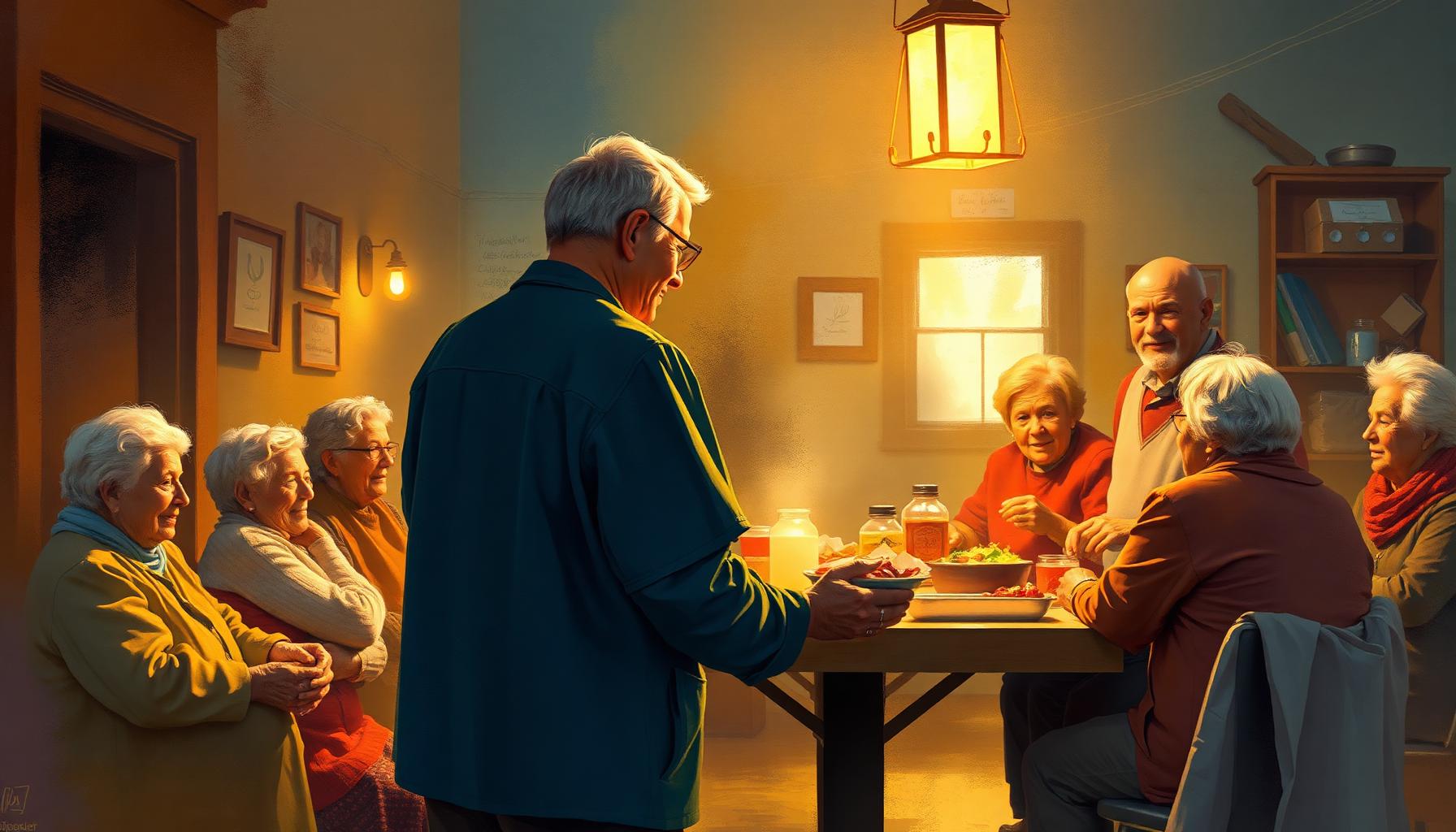
Open-table community meals and dignified, choice-based food pantries that build relationships, not lines.
Implementation Strategy
A path you can walk
- 01Phase 1 — Map vulnerability and existing care assets.
- 02Phase 2 — Launch housing-first beds and wraparound services.
- 03Phase 3 — Establish a mutual aid network at the block level.
- 04Phase 4 — Open the first community kitchen and elder cohousing.
- 05Phase 5 — Train a permanent community resilience corps.
Pilot Community
What it looks like
A city ending chronic homelessness through housing-first, with elder cohousing in every neighborhood, a veterans land-based healing program, and block-level mutual aid networks covering 80% of residents.
The Benefits
Economic. Environmental. Communal.
Economic
- ✦Housing-first costs less than the cycle of emergency rooms and jails.
- ✦Reduced healthcare and social-service spending.
- ✦Workforce participation by previously excluded residents.
Environmental
- ✦Reduced material demand through shared resources.
- ✦Adaptive reuse of buildings for housing and care.
- ✦Local resilience reduces large-scale emergency responses.
Community
- ✦Neighbors who know and look after one another.
- ✦Dignity restored to the most vulnerable.
- ✦Resilience when crises arrive.
Gallery & Videos
Coming into view
Photographs, films, and project documentation will populate this gallery as pilot communities take shape.
01 · Coming soon
02 · Coming soon
03 · Coming soon
04 · Coming soon
05 · Coming soon
06 · Coming soon
Downloadable Resources
Tools for builders
- Housing-First Implementation GuideComing soon
- Mutual Aid Starter PackComing soon
- Elder Cohousing ToolkitComing soon
Frequently Asked Questions
Honest answers
›Doesn't housing-first reward irresponsibility?
Evidence shows the opposite — stable housing enables the recovery, work, and stability that other approaches demand as preconditions.
›What about NIMBY resistance?
Well-designed, integrated housing-first programs reliably reduce — not increase — neighborhood problems. The Alliance helps communities see the data and design well.
›How do mutual aid networks form?
Through small invitations: a block dinner, a tool share, a phone tree. Most networks grow organically once the first invitations are made.
Closing Reflection
“We are kept safe not by walls but by the neighbors who would notice if our lights went out.”
— A mutual-aid organizer
The measure of a community is how it treats those most easily forgotten. Begin where you live, with the names you already know.
Continue the Journey