
Pillar X · 10 of 12
Transportation
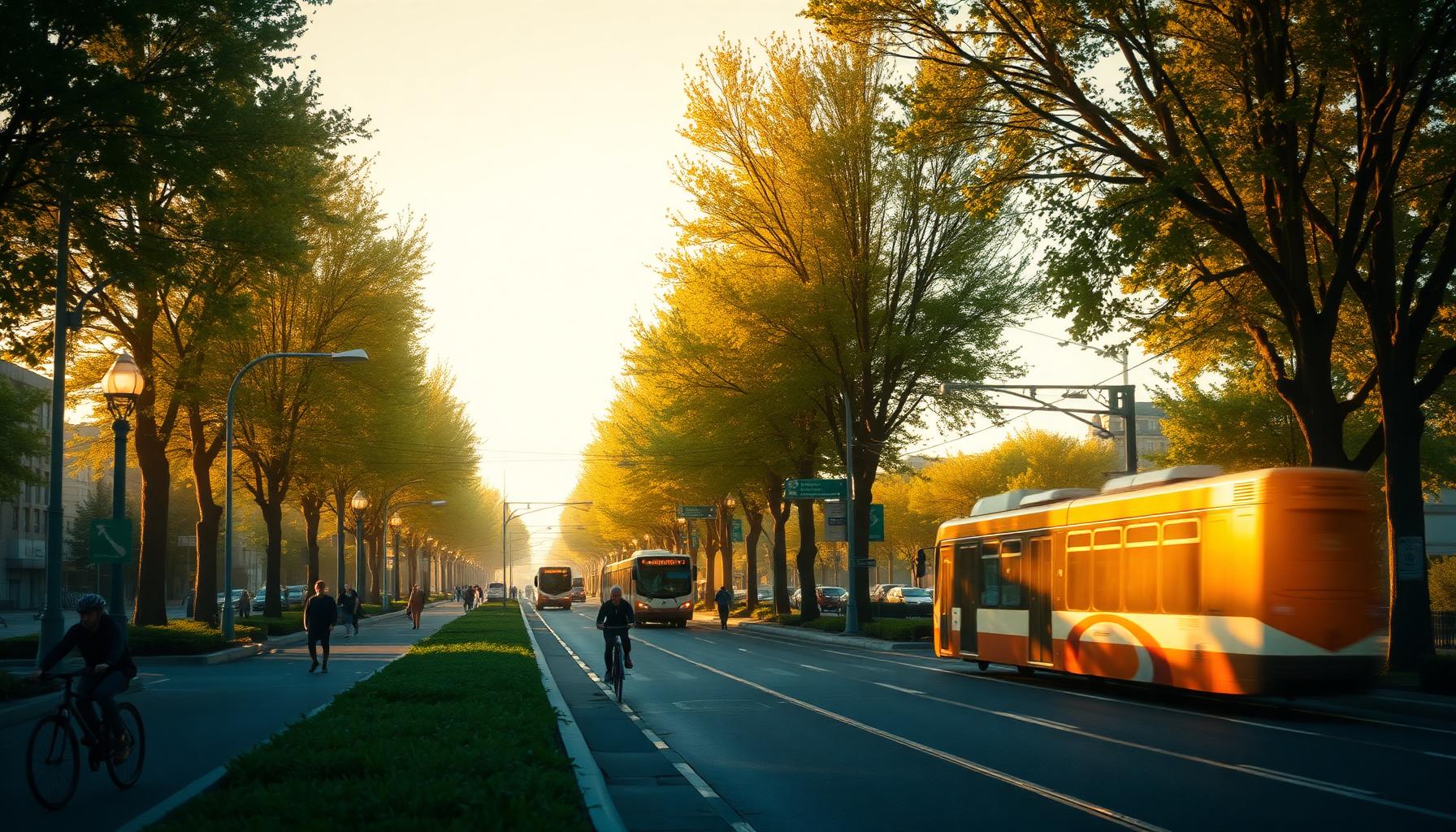
Walking, cycling, and clean mobility woven into the fabric of every neighborhood.
Mission
To make getting around safe, joyful, affordable, and clean — and to organize neighborhoods so that most daily trips can be made without a car.
Vision
Every neighborhood is a walkable place where children, elders, and the differently-abled move with safety and dignity, supported by excellent cycling and transit.
Why It Matters
The case for renewal
Auto-dependent design is the silent constraint on community life — it consumes more household income, public space, and human time than any other infrastructure.
Walkable, transit-rich neighborhoods produce dramatically better health, environmental, and economic outcomes — for everyone, including drivers.
Transportation choice is the foundation of independence: for the young, the old, the poor, and the disabled.
Current Challenges
What stands in the way
- 01Decades of zoning and road design optimized exclusively for cars.
- 02Unsafe streets that make walking and cycling dangerous.
- 03Underfunded, infrequent transit that traps the carless.
- 04Sprawl that makes short trips impossibly long.
- 05Aging infrastructure crumbling faster than it can be repaired.
Practical Solutions
What we are building
01
Complete Streets
Redesign streets to safely serve pedestrians, cyclists, transit, and drivers — with protected bike lanes, generous sidewalks, and traffic calming.
02
Frequent, Free, Reliable Transit
Buses every 10 minutes, light rail where ridership justifies it, and free fares funded by parking reform and value capture.
03
Walkable Neighborhood Plans
Coordinate housing, schools, shops, and parks so most daily trips fall within a 15-minute walk.
04
Electric & Active Mobility
E-bike rebates, secure bike parking, charging networks, and EV car-share for the trips that still need a car.
05
Green Infrastructure
Bioswales, street trees, rain gardens, and permeable surfaces integrated into every street redesign.
Implementation Strategy
A path you can walk
- 01Phase 1 — Audit existing infrastructure and demand patterns.
- 02Phase 2 — Pilot complete-streets redesigns on the highest-impact corridors.
- 03Phase 3 — Increase transit frequency and lower or eliminate fares.
- 04Phase 4 — Launch e-bike rebates and EV car-share.
- 05Phase 5 — Reform zoning so new construction supports a 15-minute neighborhood.
Pilot Community
What it looks like
A mid-sized city with 60% of residents within a 15-minute walk of daily needs, frequent free transit, and a protected cycling network connecting every neighborhood.
The Benefits
Economic. Environmental. Communal.
Economic
- ✦Households saving $8,000–$12,000 per year on car costs.
- ✦Higher retail sales on walkable streets.
- ✦Reduced infrastructure maintenance burden.
Environmental
- ✦Sharp reductions in greenhouse gas emissions.
- ✦Cleaner local air and quieter neighborhoods.
- ✦Recovered urban land from parking to public use.
Community
- ✦Streets where children play safely.
- ✦Elders who keep their independence longer.
- ✦Spontaneous encounters that build community.
Gallery & Videos
Coming into view
Photographs, films, and project documentation will populate this gallery as pilot communities take shape.
01 · Coming soon
02 · Coming soon
03 · Coming soon
04 · Coming soon
05 · Coming soon
06 · Coming soon
Downloadable Resources
Tools for builders
- Complete Streets Design ManualComing soon
- 15-Minute Neighborhood ToolkitComing soon
- Transit Funding PlaybookComing soon
Frequently Asked Questions
Honest answers
›Will this hurt drivers?
Complete streets typically reduce congestion, crashes, and travel-time variability — drivers benefit alongside everyone else.
›What about rural areas?
The mix shifts: regional transit, on-demand shuttles, EV car-share, and walkable town centers anchor a rural mobility plan.
›How is free transit paid for?
Parking reform, value capture from rising land prices near transit, employer fees, and reallocation from existing road budgets.
Closing Reflection
“The measure of a city is whether a child can cross it on their own.”
— An urban planner
Move slower, see more, save more, breathe deeper. The Alliance returns the street to the people who live on it.
Continue the Journey