
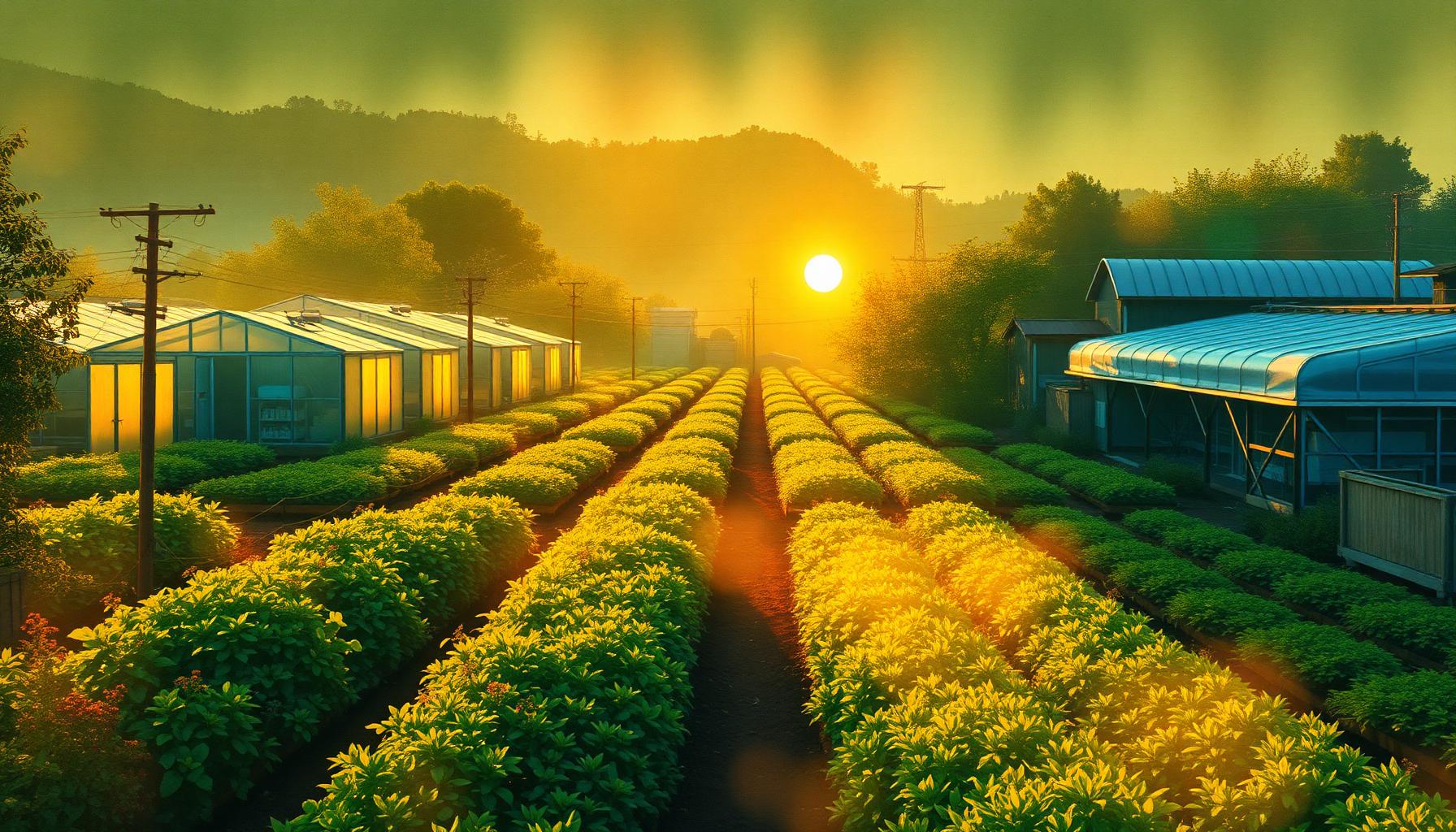
Pillar I · 01 of 12
Food Resiliency Network
Food sovereignty rooted in soil, season, and shared abundance.
Mission
To return food to its rightful place at the center of community life — grown by neighbors, eaten in season, and shared as the first language of belonging.
Vision
Every neighborhood, urban or rural, lives within walking distance of nourishing food grown by people they know.
Why It Matters
The case for renewal
Industrial food systems have severed the most ancient covenant between humans and the land. A single supply chain shock now empties shelves a continent away from where the harvest failed.
Restoring food sovereignty is not nostalgia — it is the most direct path to community health, ecological repair, climate resilience, and dignified work close to home.
When children watch a seed become a meal, they recover something cities forgot: that abundance is a relationship, not a product.
Current Challenges
What stands in the way
- 01Concentration of agricultural land in a small number of corporate hands.
- 02Topsoil loss accelerating at roughly ten times the rate of natural replenishment.
- 03Food deserts adjacent to farmland exporting most of its yield.
- 04Loss of generational growing knowledge as small farms disappear.
- 05Fragile, long-distance supply chains vulnerable to weather and conflict.
Practical Solutions
What we are building
01
Regenerative Farm Cooperatives
Network mid-scale farms practicing no-till, cover cropping, integrated livestock, and silvopasture. Share equipment, training, and distribution channels.
02
Neighborhood Greenhouses & Seed Libraries
Year-round growing in passive solar greenhouses paired with publicly stewarded seed libraries that preserve regional heirloom varieties.
03
Community Kitchens & Food Preservation
Shared commercial kitchens for canning, fermenting, and milling — transforming harvest peaks into year-round nourishment and small-business launching pads.
04
Rooftop & Schoolyard Gardens
Reclaim unused urban surface area for edible landscapes; embed living classrooms in every school where children grow what they eat.
05
Local Food Hubs
Aggregate small-farm output into competitive supply for schools, hospitals, restaurants, and grocery cooperatives within a 100-mile foodshed.
Implementation Strategy
A path you can walk
- 01Phase 1 — Map the foodshed. Inventory existing growers, land assets, processing infrastructure, and gaps.
- 02Phase 2 — Seed the first cooperative. Recruit 5–10 founding farms and launch a shared distribution route.
- 03Phase 3 — Build the public infrastructure. Open the first community kitchen, greenhouse, and seed library.
- 04Phase 4 — Weave education. Establish school gardens and a working-farm apprenticeship in every district.
- 05Phase 5 — Replicate. Document the model and seed the next foodshed.
Pilot Community
What it looks like
A 30-mile foodshed anchored by one mid-sized town, with a founding cooperative of regenerative farms, a community kitchen housed in a renovated agricultural building, and a school-garden program embedded in every K–12 campus.
The Benefits
Economic. Environmental. Communal.
Economic
- ✦Keeps food dollars circulating locally instead of leaking to distant corporations.
- ✦Creates dignified, skilled livelihoods rooted in place.
- ✦Lowers household food costs through cooperative buying and gardening.
Environmental
- ✦Rebuilds topsoil and sequesters atmospheric carbon at scale.
- ✦Restores pollinator habitat and watershed health.
- ✦Eliminates thousands of food-miles per meal.
Community
- ✦Reconnects neighbors through shared meals and harvest rituals.
- ✦Restores intergenerational knowledge transfer.
- ✦Builds resilience against supply shocks and disasters.
Gallery & Videos
Coming into view
Photographs, films, and project documentation will populate this gallery as pilot communities take shape.
01 · Coming soon
02 · Coming soon
03 · Coming soon
04 · Coming soon
05 · Coming soon
06 · Coming soon
Downloadable Resources
Tools for builders
- Foodshed Mapping ToolkitComing soon
- Cooperative Bylaws TemplateComing soon
- School Garden CurriculumComing soon
Frequently Asked Questions
Honest answers
›Isn't local food more expensive?
Cooperative aggregation, shared infrastructure, and direct-to-eater models routinely meet or beat grocery prices — especially when external costs (subsidies, healthcare, climate damage) are accounted for.
›What about cities with little arable land?
Rooftop greenhouses, vertical farms, peri-urban farm partnerships, and intensive permaculture lots can produce extraordinary yields in tight footprints.
›How long until a foodshed is resilient?
Meaningful local capacity can be built in three to five years; deep regenerative soil restoration is a generational project worth beginning today.
Closing Reflection
“To plant a seed is to vote for a future you may not live to harvest.”
— A grower of the foodshed
We were never meant to eat alone, from strangers, at speed. The work begins with a single bed of soil, a single jar of seed, a single shared meal — and grows outward like every living thing.
Continue the Journey
The next pillar awaits
Previous Pillar
The first pillar of renewal
Return to the Alliance
All twelve pillars
Next Pillar →
Pillar II
Community Wellness Centers