
Pillar V · 05 of 12
Sustainable Housing
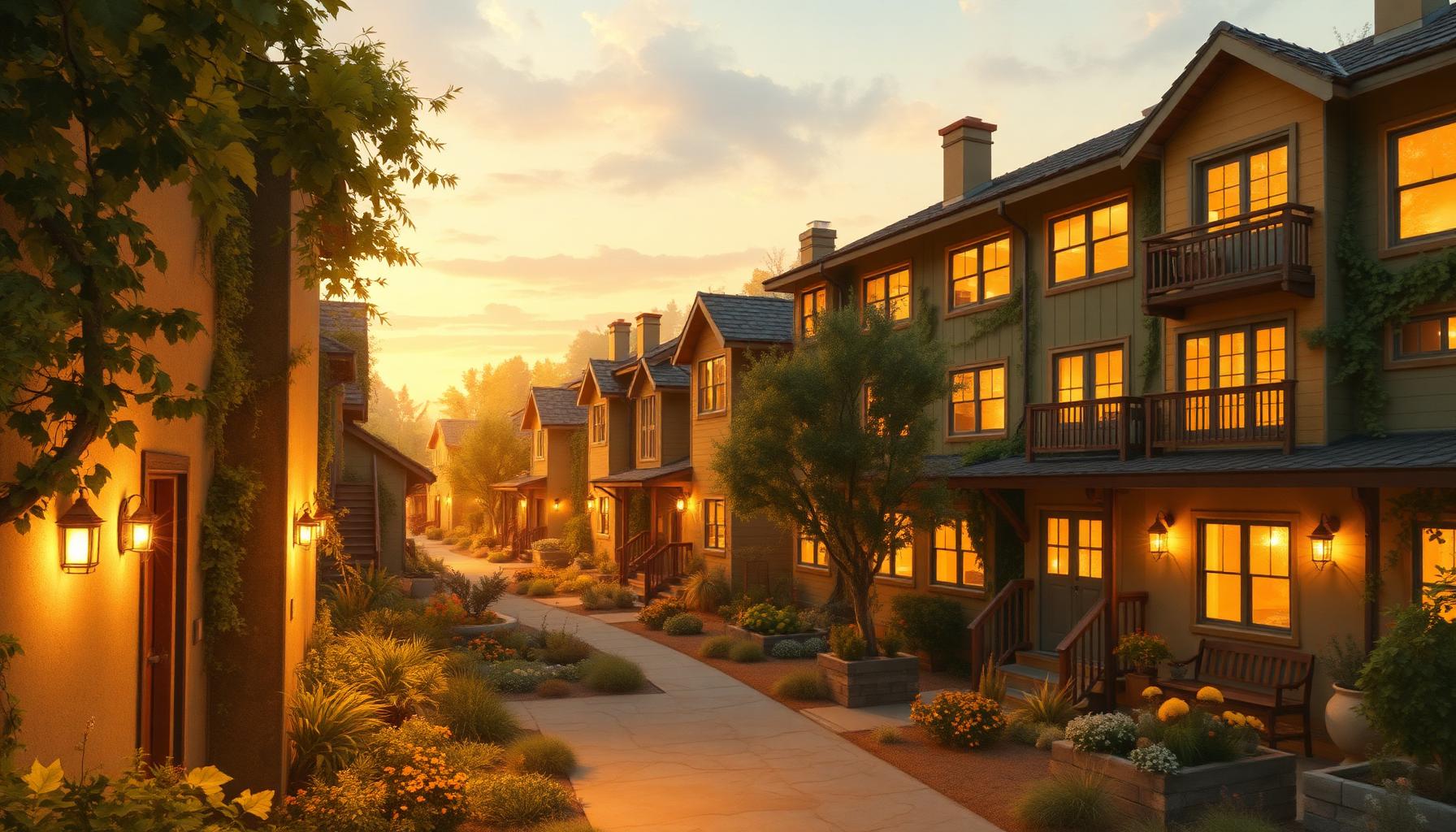
Beautiful, affordable homes in walkable neighborhoods built to last centuries.
Mission
To make beautiful, durable, energy-positive housing the baseline for ordinary working people — and the neighborhoods around it places worth a lifetime.
Vision
Every working household can afford a home that is healthy, beautiful, energy-positive, and embedded in a neighborhood you can walk through with joy.
Why It Matters
The case for renewal
The housing crisis is not only a price crisis; it is a quality, beauty, and belonging crisis. We have built decades of homes that age into liabilities rather than legacies.
Natural materials, passive design, and walkable patterns lower lifetime costs, improve health, and produce neighborhoods that grow more loved over time.
Housing is the largest single expense and largest single carbon footprint for most families — the highest-leverage place to begin.
Current Challenges
What stands in the way
- 01Zoning that forbids the missing-middle housing of corner stores, duplexes, and courtyards.
- 02Construction systems optimized for short-term profit, not century-scale durability.
- 03Land prices captured by speculation rather than residence.
- 04Auto-dependent sprawl that isolates households and inflates infrastructure costs.
- 05Loss of skilled traditional building trades.
Practical Solutions
What we are building
01
Pattern-Book Walkable Neighborhoods
Mixed-income, mixed-use blocks designed from time-tested patterns — courtyards, porches, small parks, corner stores within five minutes' walk.
02
Passive-Solar, Natural-Material Homes
Hempcrete, straw-bale, mass timber, rammed earth, lime plaster — non-toxic, durable, beautiful, and locally sourceable.
03
Community Land Trusts
Permanently affordable ownership models that capture land value for the community rather than speculators.
04
Co-Housing & Multi-Generational Designs
Shared courtyards, kitchens, and tool rooms reduce per-household cost and isolation while preserving privacy.
05
Trades Revival & Local Building
Apprenticeship programs to rebuild the skilled workforce of carpenters, masons, plasterers, and builders.
Implementation Strategy
A path you can walk
- 01Phase 1 — Reform zoning to legalize walkable, mixed-use neighborhoods.
- 02Phase 2 — Establish a community land trust and acquire founding parcels.
- 03Phase 3 — Build a pilot neighborhood of 60–150 homes using local materials and methods.
- 04Phase 4 — Launch the trades apprenticeship to staff the next neighborhoods.
- 05Phase 5 — Replicate; let the pattern adapt to local geography and culture.
Pilot Community
What it looks like
A 12-acre walkable neighborhood of 120 mixed-income homes, a corner store, a small green, and a community workshop — built by a local trades cooperative.
The Benefits
Economic. Environmental. Communal.
Economic
- ✦Lower lifetime housing costs through durability and efficiency.
- ✦Local wealth from local building.
- ✦Reduced transportation costs through walkability.
Environmental
- ✦Dramatic reductions in embodied and operational carbon.
- ✦Healthy indoor air and natural materials.
- ✦Less land consumed per household.
Community
- ✦Neighbors who know each other by name.
- ✦Children who walk safely to school.
- ✦Elders who stay in their own neighborhoods.
Gallery & Videos
Coming into view
Photographs, films, and project documentation will populate this gallery as pilot communities take shape.
01 · Coming soon
02 · Coming soon
03 · Coming soon
04 · Coming soon
05 · Coming soon
06 · Coming soon
Downloadable Resources
Tools for builders
- Pattern Book of Walkable NeighborhoodsComing soon
- Natural Building Material AtlasComing soon
- Community Land Trust ToolkitComing soon
Frequently Asked Questions
Honest answers
›Is natural building actually durable?
Properly designed natural buildings routinely outlast their conventional counterparts — many are still standing after centuries.
›Won't this be more expensive?
Up-front costs are often comparable; lifetime costs (energy, maintenance, health) are sharply lower. Land trusts further protect affordability.
›How do we get the zoning changed?
The Alliance maintains model ordinances and provides advocacy support to local councils — many cities have already adopted them.
Closing Reflection
“A house should outlast the mortgage, outlive its builders, and grow more beloved each generation.”
— A traditional builder
We do not have a housing shortage. We have a shortage of neighborhoods worth living in. The Alliance builds the second so the first stops being a problem.
Continue the Journey